Gapmap AI
Turns startup ideas into complete business plans using AI - executive summaries, competitor maps, and market insights, generated interactively.
 Next.js
  Supabase
  Perplexity
  Framer Motion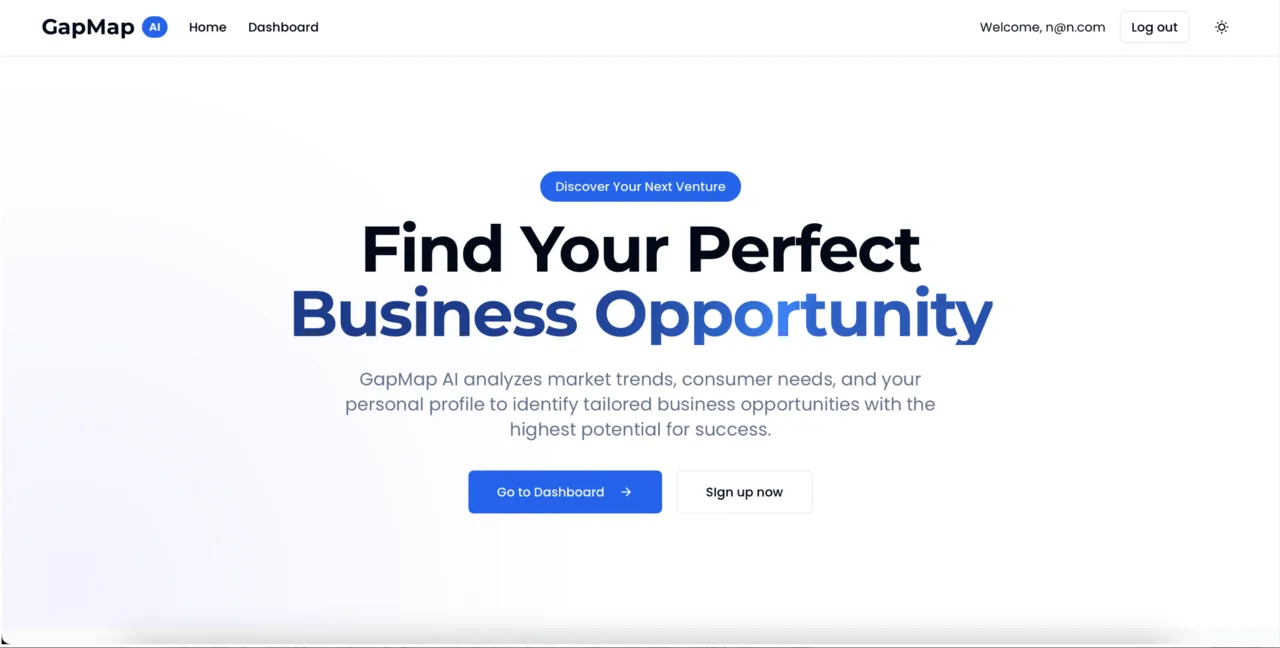
Overview
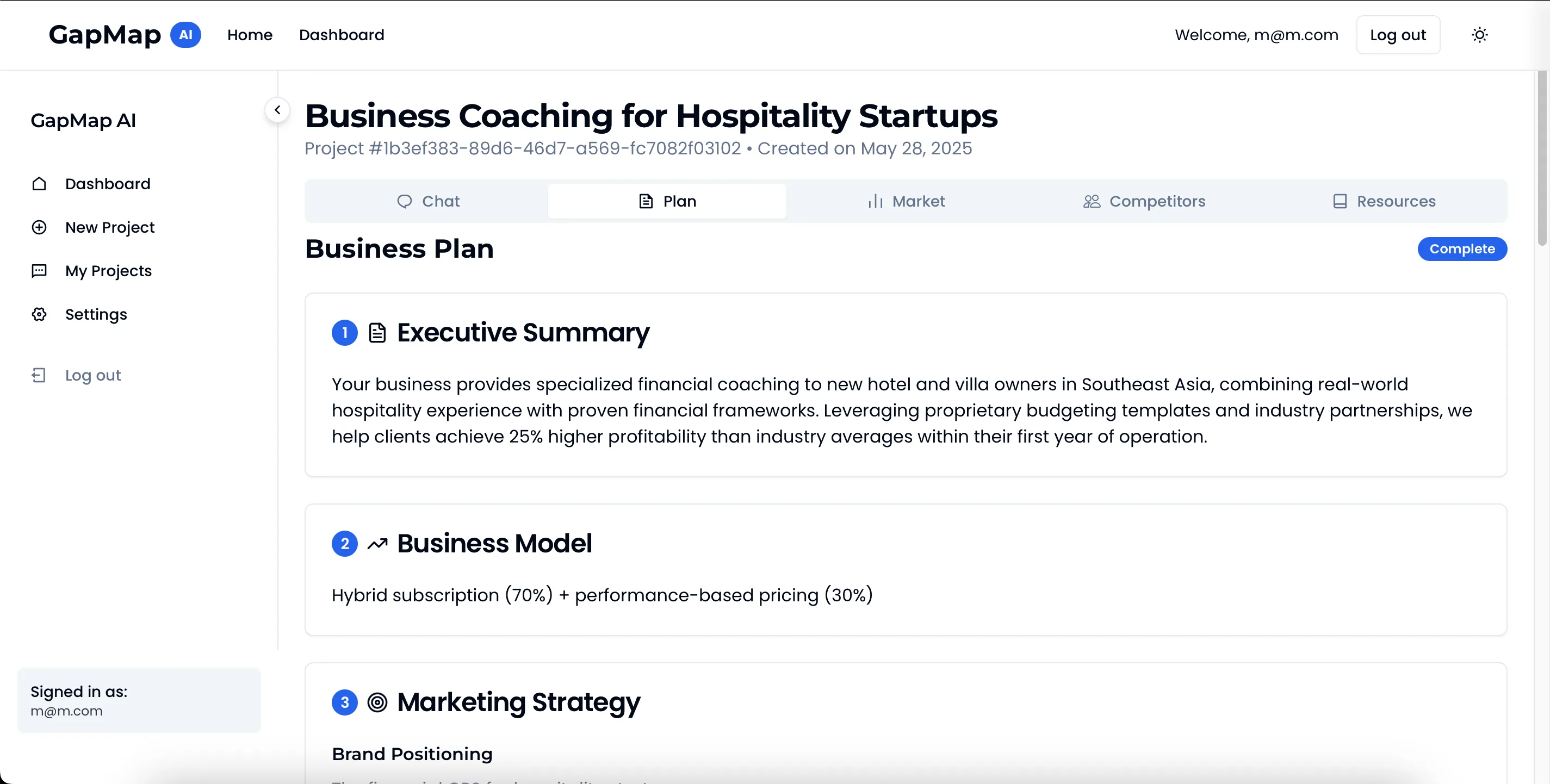
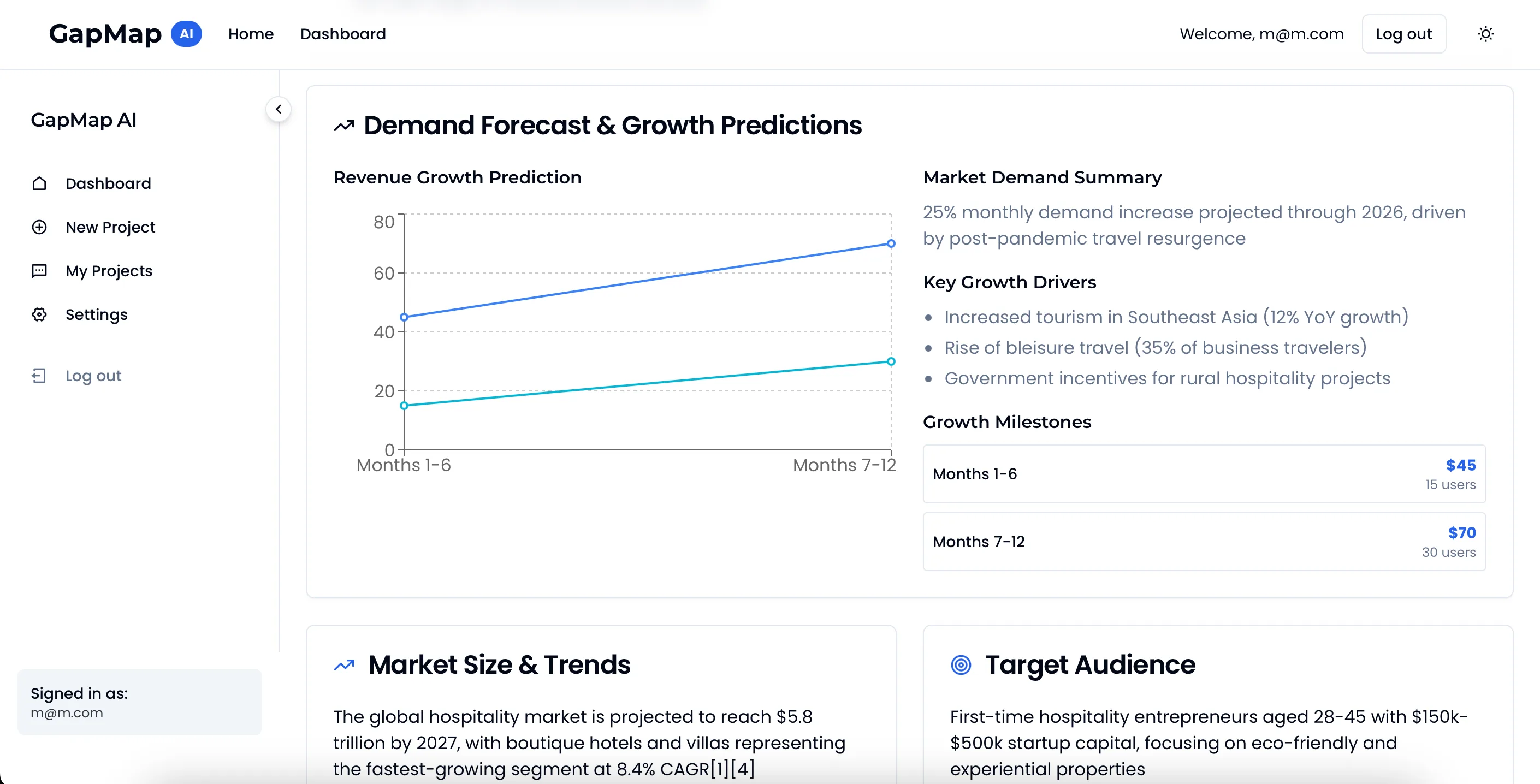
Gapmap AI is an AI business-planning companion that turns a vague idea into an actionable plan. You describe your background and what you want to build, it generates business ideas that actually fit you, and any idea you save can be expanded into a full plan - executive summary, market analysis, competitor research - with a project-specific chatbot to brainstorm against. Built for the Perplexity Hackathon.
The problem
So many people have a good business idea but get stuck at “okay, but how do I actually turn this into a real business?” The gap between the idea and the first practical steps is full of regulations, market research, and competitor analysis - days of boilerplate work before you can even pressure-test whether the idea is worth pursuing.
What I built
A guided journey from idea to plan:
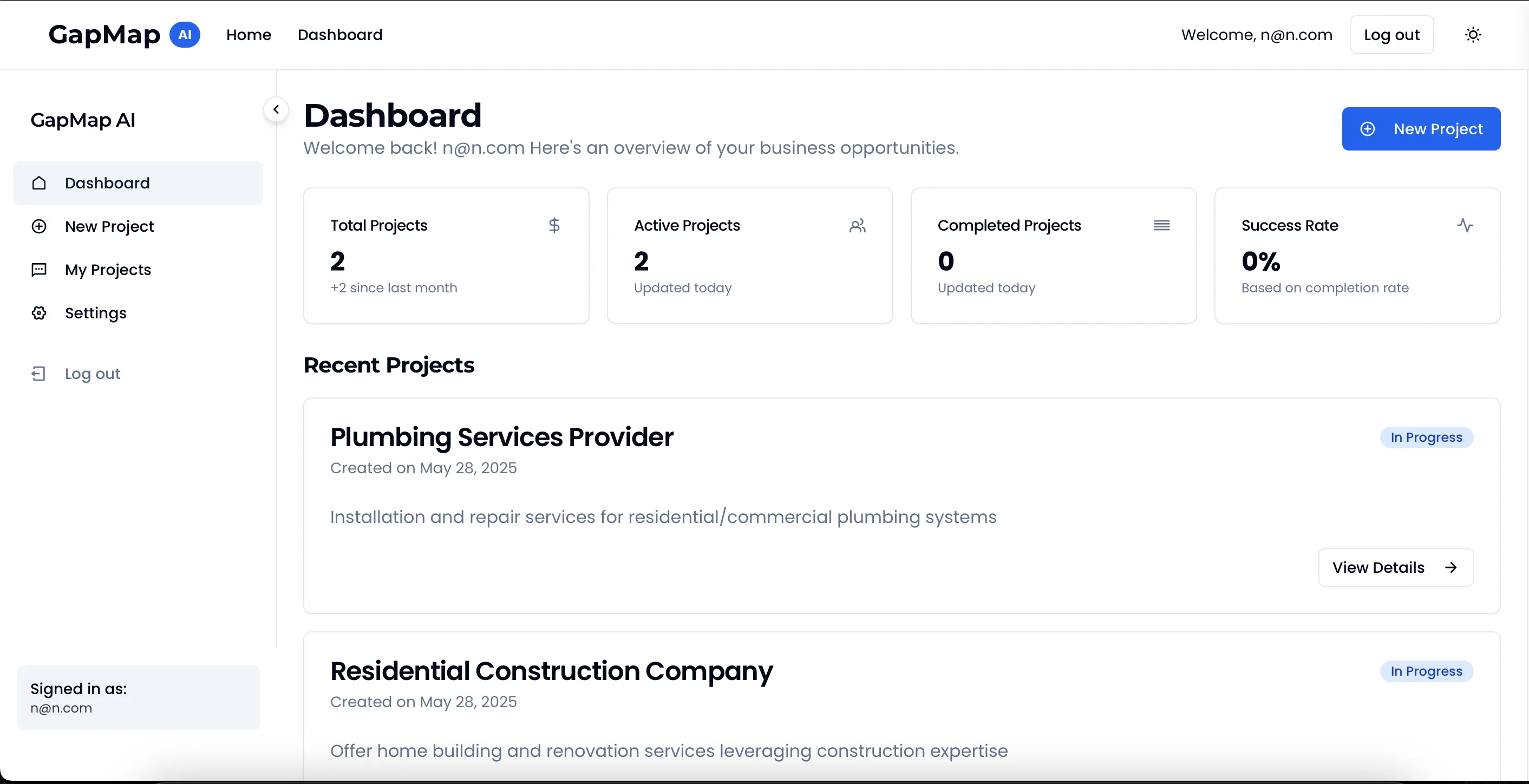
- Tell us about yourself - a short profile of your background, skills, and the kind of business you’re dreaming about.
- Personalized ideas -
sonar-reasoning-proanalyzes that profile and returns business ideas that make sense for you, not generic templates. - Save the good ones to a dashboard.
- Go deep - pick an idea and
sonar-deep-researchgenerates a detailed business plan: market analysis, competition, positioning, the works. - Chat it out - every saved project gets its own chatbot (the base
sonarmodel) so you can ask questions and brainstorm anytime.
Tech & approach
The app is Next.js with Supabase providing the Postgres database, auth, and real-time updates when projects are saved - which let me focus on the AI integration instead of rebuilding basic infrastructure. The flow is simply user input → Next.js → Supabase → Sonar API → back to the user.
The interesting decision was grounding. A generic LLM will happily invent a market size or a competitor that doesn’t exist, which is worse than useless to a founder. Routing research through Perplexity’s Sonar models means every claim comes with a real, current citation behind it. Framer Motion drives the step-by-step generation UX so a multi-stage AI process feels responsive rather than like a long, opaque wait.
Challenges
The interesting problems were all at the API boundary. Rate limiting forced a request-queuing strategy - staying within quota without making users wait forever. JSON handling was fiddly because model output isn’t always clean, so a lot of work went into parsers and validators. And Sonar’s citations and reasoning steps are great for quality but meant building special handling for those richer response formats.
What I learned
Grounding beats fluency. Early versions produced beautiful, confident plans that fell apart the moment a founder checked a number. Wiring in sourced research changed the product from “impressive demo” to “thing you’d actually paste into a pitch deck.”
I also learned that flexibility is everything when building on AI APIs - you can’t assume the model responds the way you expect, so robust error handling and graceful fallbacks aren’t optional. And rate limiting isn’t just a technical constraint, it’s a UX problem: managing user expectations while staying within limits is part of the design.
What I’d improve next
- Payment and subscription tiers, because good AI and server time aren’t free.
- Agentic research - AI agents that proactively analyze competitors and market trends and keep a plan up to date on their own.
- Community features so users can share anonymized successful plans and learn from each other.
Screenshots